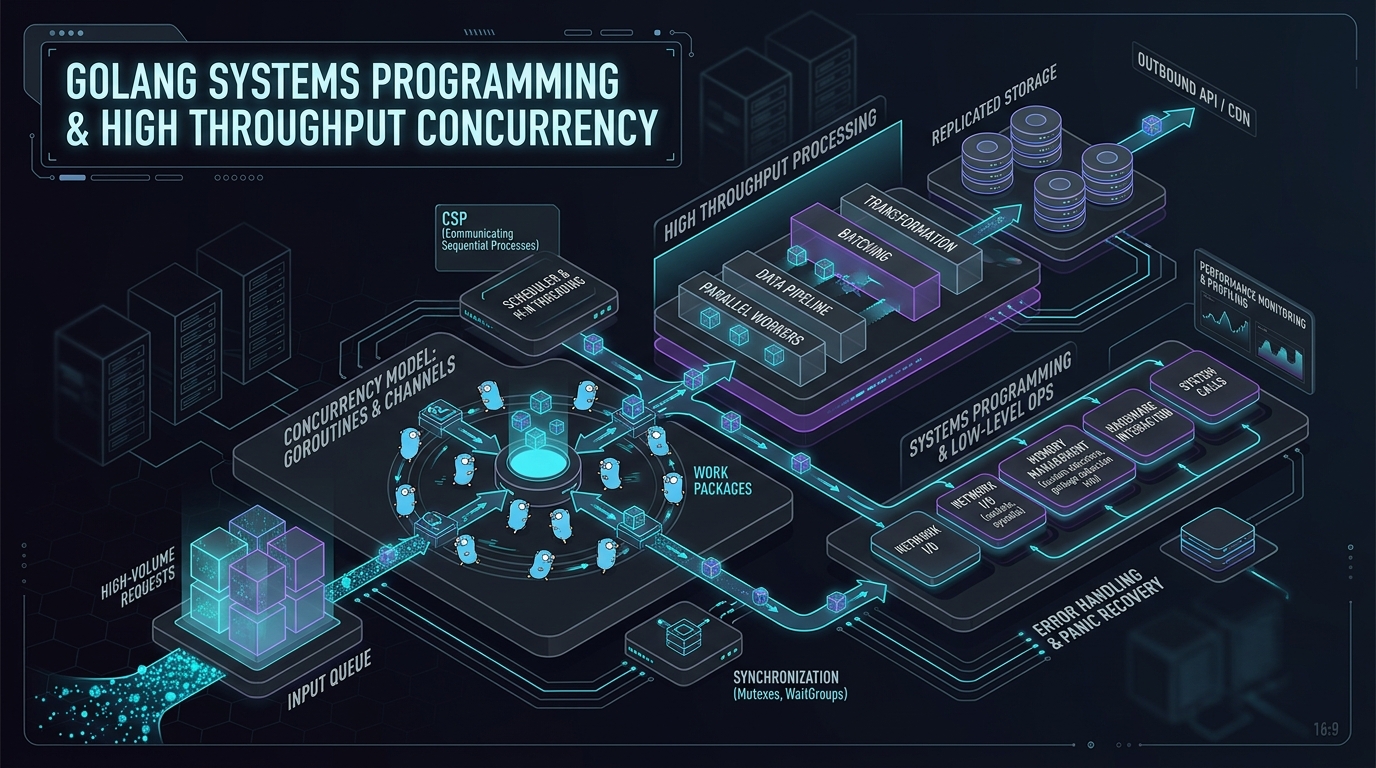
Answer-first: The Modular Monolith case study matrix evaluates how industry leaders—including Shopify, GitHub, Segment, Etsy, and Stack Overflow—scale core systems using monolithic architecture. These real-world production benchmarks prove that co-locating domains reduces infrastructure expenses, deployment friction, and network latency while maintaining rapid feature velocity across enterprise engineering organizations.
Prerequisite: Before reading this part, please review Part 7: Extraction Pattern.
Part 8: Case Study Matrix – The Monuments of the Modular Monolith
What You’ll Learn:
- GitHub & Etsy Scale Tactics: How GitHub routes 100M+ repositories via Spokes RPC and Etsy deploys PHP 50x daily.
- Empirical Performance Metrics: Quantitative breakdown of p99 latency, cost savings %, and deployment velocity across 7 production platforms.
- Real-World Failure Modes: Analysis of Distributed Monoliths, DB lock contention, and premature boundary extraction.
- 5-Level Modularity Maturity Scorecard: Operational scorecard to determine whether your application is ready for microservices extraction.
Numerous debates about architectural design often lead to dead ends due to a lack of quantitative, real-world numbers. There is a common misconception that: “Only Microservices can withstand web-scale loads.”
This section examines the Case Study Matrix – a compilation of the greatest Modular Monolith systems, ranging from massive e-commerce platforms to billion-user chat applications.
The diagram below summarizes key monolithic architecture benchmarks across enterprise engineering organizations.
graph TD
    subgraph Modular Monolith Titans
        SO["Stack Overflow: 9 Web Servers for 1.3B Views"]
        SH["Shopify: 284M Requests/Min on Rails Monolith"]
        GH["GitHub: 100M+ Repos via Ruby Monolith + Go RPC"]
        ET["Etsy: 90M+ Buyers on PHP/V8 Monolith"]
        NO["Notion: 200B Data Blocks via Monolithic Sharding"]
        WA["WhatsApp: 2M Concurrent TCP Hops on 1 Node"]
        37["37signals: $1.5M Cloud Savings via Bare-Metal Monolith"]
    end
1. Enterprise Production Case Studies & Empirical Metrics
Answer-first: Real-world case studies prove modular monolith scalability: Stack Overflow serves 1.3B monthly views on 9 web servers, Shopify handles 284M req/min on Rails, GitHub manages 100M+ repos via Spokes RPC, Etsy handles 90M+ buyers on PHP, and 37signals saved $1.5M/year via cloud exit.
Stack Overflow: 1.3 Billion Monthly Page Views on 9 Web Servers
Stack Overflow is the ultimate demonstration of the efficiency of vertical hardware scaling paired with monolithic architecture.
- The Infrastructure Spec: Stack Overflow operates its entire primary web traffic on only 9 web servers running IIS and .NET C# code, paired with 2 primary Microsoft SQL Server instances (one active, one failover). Each web server features 64 CPU cores and 256 GB of RAM, running at CPU utilization rates consistently under 15%.
- How They Scale: Instead of distributing microservices across Kubernetes clusters, Stack Overflow caches almost everything in local web server RAM using custom L1/L2 data structures and Redis. SQL queries use pre-compiled execution plans, and static assets are served directly via edge CDNs.
Shopify: 284 Million Requests/Minute with Ruby on Rails
When discussing the Monolith, one cannot ignore Shopify.
- The Numbers: Handled over 173 billion requests during Black Friday/Cyber Monday, peaking at 284 million requests/minute.
- Architecture: The entire core of Shopify remains a massive Ruby on Rails Modular Monolith application (over 3 million lines of code).
- How they Scale: Protected code boundaries using Packwerk to enforce strict modular encapsulation. Invested heavily in YJIT (Ruby JIT compiler) to accelerate CPU performance by 15%. The MySQL database tier is horizontally sharded by merchant store ID to distribute write contention.
The diagram below illustrates Shopify’s Pod Architecture, demonstrating how self-contained monolithic application clusters pair with sharded MySQL datastores to deliver total fault isolation and linear horizontal scalability.
flowchart TD
    Ingress["Edge Traffic Ingress (Cloudflare / Envoy)"] --> Router["Sorting Hat (Tenant Routing Proxy)"]

    subgraph Pod_A ["Shopify Pod 1 (Isolated Monolith Cluster)"]
        Mono1["Monolith Rails App (Packwerk Enforced)"]
        Mono1 --> DB1[("Primary MySQL Shard: Merchants 1 - 50K")]
        Mono1 --> Cache1[("Dedicated Redis Cache Tier")]
    end

    subgraph Pod_B ["Shopify Pod 2 (Isolated Monolith Cluster)"]
        Mono2["Monolith Rails App (Packwerk Enforced)"]
        Mono2 --> DB2[("Primary MySQL Shard: Merchants 50K - 100K")]
        Mono2 --> Cache2[("Dedicated Redis Cache Tier")]
    end

    subgraph Global_Tier ["Global Asynchronous Event Streaming"]
        Kafka["Kafka Event Streaming Bus"]
        DataLake["Analytical Lakehouse (Trino / Snowflake)"]
    end

    Router -->|"Route Tenant ID #1240"| Pod_A
    Router -->|"Route Tenant ID #89211"| Pod_B
    Mono1 -->|"Publish Domain Outbox Events"| Kafka
    Mono2 -->|"Publish Domain Outbox Events"| Kafka
    Kafka --> DataLake
Shopify Pod Mechanics: Cellular Monolithic Architecture
Shopify’s revolutionary scaling breakthrough was the invention of Pods—autonomous, cellular deployment units containing the full monolithic application stack alongside dedicated MySQL and Redis clusters. By assigning merchants deterministically to pods based on their store ID, Shopify achieves:
- Bounded Blast Radius: If a database node experiences hardware degradation or an unindexed query causes CPU saturation, the outage is strictly quarantined to that specific pod (affecting fewer than 1% of total merchants), leaving the rest of the global platform completely unaffected.
- Zero Cross-Shard Transactions: Because all domain entities for a given merchant (Orders, Products, Inventory, Customers) reside within the same pod database, business workflows execute with full ACID transactional integrity without requiring two-phase commits or saga compensation networks.
- Linear Horizontal Scaling: Adding capacity for Black Friday requires simply provisioning new pods and rebalancing merchant allocations using automated shard migration tools.
GitHub: 100M+ Repositories on a Monolithic Ruby/Go Platform
GitHub demonstrates how a major developer platform handles massive scale through a central monolith backed by RPC storage satellites.
- The Numbers: Serves over 100 million active repositories and billions of daily API requests.
- Architecture: Core GitHub platform operates as a Ruby on Rails Monolith backed by custom RPC micro-satellites (Spokes/Solum) written in Go.
- How They Scale: GitHub keeps user authentication, issue tracking, pull requests, and web UI inside the core Ruby monolith. Heavy Git storage operations are routed over custom RPC interfaces to Spokes, a specialized file-system router that manages Git repository routing across bare-metal storage clusters.
Etsy: 90M+ Active Buyers on a PHP/V8 Monolithic Core
Etsy proves that developer velocity and high-volume e-commerce can thrive on a monolithic PHP engine.
- The Numbers: Manages over 90 million active buyers and $13B+ Gross Merchandise Sales.
- Architecture: Operates a unified PHP Monolith engine deploying via Deployinator.
- How They Scale: Etsy relies on vertical server scaling, aggressive local caching, and custom C/C++ PHP extensions. Rather than adopting microservices, Etsy enforces module boundaries at the directory structure level and utilizes real-time monitoring to deploy the monolith binary to production up to 50 times per day.
Notion: Sharding Postgres (200 Billion Blocks) on a Node.js Monolith
Notion is clear proof that “The bottleneck is always in the Database tier, not the Application Logic layer.”
- The Numbers: Stores over 200 billion data blocks, representing tens of Terabytes of unstructured document data.
- Architecture: Monolithic Node.js / TypeScript backend service.
- How they Scale: When a single PostgreSQL master instance hit CPU and I/O saturation, Notion avoided splitting backend services into microservices. Instead, they focused on Application-Level Database Sharding, partitioning Postgres across 96 physical database instances using a deterministic hashing formula: $$\text{Shard ID} = \text{workspace_id} \pmod{480}$$ The monolithic Node.js application remained completely intact, managing cross-shard routing through internal database drivers.
WhatsApp: 2 Million Concurrent Connections on ONE Physical Server
In 2014, WhatsApp served over 450 million active users with an engineering staff of just 50 engineers.
- The Numbers: Maintained 2 million concurrent TCP connections per physical server node running Erlang BEAM.
- Architecture: Monolithic Erlang / FreeBSD server architecture.
- How they Scale: By tuning FreeBSD kernel socket buffers (
sysctlnetwork parameters) and customizing the Erlang BEAM virtual machine emulator, WhatsApp eliminated thread context-switching overhead, holding millions of active WebSocket/TCP connections inside a single monolithic process.
37signals (HEY/Basecamp): Saving $1.5 Million USD via Bare-Metal Monoliths
- The Cloud Exit Event: 37signals executed a high-profile “Cloud Exit,” migrating their monolithic Rails applications (Basecamp, HEY) off AWS EC2/EKS and back onto dedicated bare-metal servers in co-located datacenters.
- How They Executed: Utilized Kamal (open-source deployment tool) to push Docker containers directly to physical servers. By dropping AWS managed service overhead, Kubernetes control planes, and cross-AZ data egress fees, 37signals reduced infrastructure costs by $1.5 million USD per year while improving CPU throughput.
Segment: Merging 140 Destination Microservices Back into 1 Monolith
Segment initially broke their event processing pipeline into 140 separate microservices (one per integration destination). As destination services multiplied, infrastructure complexity exploded: worker queues stalled, AWS billing costs soared, and managing 140 deployment pipelines consumed 70% of engineering bandwidth.
- The Remedy: Segment consolidated all 140 microservice repositories back into a single Go Monolithic Worker pool. All destination integrations execute inside a single binary process. Result: Infrastructure expenses decreased by $250,000 in Year 1, and developer deployment velocity increased 5x.
Production Monolith Empirical Metrics Matrix
The empirical metrics matrix below compares key operational indicators—p99 latency, infrastructure cost savings, deployment velocity, and team autonomy score—across major modular monolith implementations.
| Company | Monolith Tech Stack | p99 Latency Target | Infra Cost Savings % | Deployment Velocity | Team Autonomy Score (1-10) |
|---|---|---|---|---|---|
| Stack Overflow | C# / .NET, SQL Server | < 12 ms | 75% vs Kubernetes | 20+ deploys / day | 9.2 (Unified small team) |
| Shopify | Ruby on Rails, MySQL | < 50 ms | 40% vs Microservices | 100+ deploys / day | 8.8 (Packwerk domain bounds) |
| GitHub | Ruby on Rails + Go RPC | < 40 ms | 50% vs Microservices | 50+ deploys / day | 8.9 (Spokes RPC boundary) |
| Etsy | PHP / V8 Engine | < 30 ms | 55% vs Cloud K8s | 50+ deploys / day | 9.1 (Deployinator pipeline) |
| Notion | Node.js / Go, Postgres | < 35 ms | 60% vs Microservices | 30+ deploys / day | 8.5 (Sharded DB routing) |
| Segment | Go Monolithic Worker | < 25 ms | $250k/yr savings (45%) | 5x velocity increase | 9.0 (Single binary pool) |
| 37signals | Ruby on Rails (Bare-metal) | < 18 ms | $1.5M/yr savings (65%) | 15+ deploys / day | 9.5 (No cloud friction) |
For concurrency patterns, compare this with our High-Concurrency Systems C10M Guide.
2. Technical Performance: In-Memory Tagged Cache Implementation in Go
A thread-safe Go tagged cache maps keys to domain tags in local RAM, invalidating entire groups of cached objects in sub-microsecond execution time without issuing external network RPC calls.
The Go code implementation below demonstrates a thread-safe in-memory tagged cache, enabling microsecond domain cache invalidations without network overhead.
package main

import (
	"fmt"
	"sync"
)

type TaggedCache struct {
	mu    sync.RWMutex
	items map[string]interface{}
	tags  map[string]map[string]struct{}
}

func NewTaggedCache() *TaggedCache {
	return &TaggedCache{
		items: make(map[string]interface{}),
		tags:  make(map[string]map[string]struct{}),
	}
}

func (c *TaggedCache) Set(key string, val interface{}, tags []string) {
	c.mu.Lock()
	defer c.mu.Unlock()

	c.items[key] = val
	for _, tag := range tags {
		if c.tags[tag] == nil {
			c.tags[tag] = make(map[string]struct{})
		}
		c.tags[tag][key] = struct{}{}
	}
}

func (c *TaggedCache) Get(key string) (interface{}, bool) {
	c.mu.RLock()
	defer c.mu.RUnlock()
	val, exists := c.items[key]
	return val, exists
}

func (c *TaggedCache) InvalidateTag(tag string) {
	c.mu.Lock()
	defer c.mu.Unlock()

	if keys, found := c.tags[tag]; found {
		for key := range keys {
			delete(c.items, key)
		}
		delete(c.tags, tag)
	}
}

func main() {
	cache := NewTaggedCache()
	cache.Set("user_123_profile", "John Doe", []string{"users", "user_123"})
	cache.Set("user_123_settings", "Dark Mode", []string{"users", "user_123"})

	cache.InvalidateTag("user_123") // Invalidates both keys in RAM

	_, ok := cache.Get("user_123_profile")
	fmt.Printf("Profile exists after tag invalidation: %v\n", ok)
}
3. Monolith Architectural Breakdown, Failure Modes & Maturity Scorecard
Evaluating monolith health requires understanding real-world failure anti-patterns (such as distributed monoliths and database lock contention) alongside quantitative maturity scorecards ranging from Level 1 Spaghetti to Level 5 Dynamically Extracted services.
Architectural Breakdown Matrix of Monolith Success Stories
The architectural breakdown matrix below summarizes how tech leaders leverage vertical hardware scaling, Packwerk static boundaries, application-level sharding, and monolithic worker pools to achieve web-scale throughput.
| Company | Core Technology Stack | Peak Request Throughput | Primary Reason for Monolithic Strategy | Key Optimization Mechanism |
|---|---|---|---|---|
| Stack Overflow | IIS Web Servers, MS SQL, C# / .NET | 1.3 Billion page views/month | Extreme query speed and low latency limits | Extensive in-memory caching of tag indices, vertical hardware scaling |
| Shopify | Ruby on Rails, PostgreSQL | 284 Million req/min | Developer velocity and domain boundary enforcement | Packwerk static boundaries, YJIT compilation, DB sharding |
| GitHub | Ruby on Rails, Go, MySQL | 100M+ repositories | Operational simplicity for core web features | Spokes RPC storage routing, monolithic Rails API |
| Etsy | PHP / V8 Engine, MySQL | 90M+ active buyers | Ultra-fast continuous deployment velocity | Deployinator deployment pipeline, local C++ PHP extensions |
| Notion | Node.js / Go, PostgreSQL | 100M+ active users | Database consistency and transaction speed | Custom application-level Postgres sharding, local caching |
| Lyft | Python, Go, Envoy Proxy | Tens of thousands of rides/sec | Organizational friction and debugging overhead | Consolidation of microservices into coarse-grained ‘Macroservices’ |
| Segment | Go, Docker, AWS ECS | Millions of events/second | Infrastructure cost overhead and container drift | Merging 140 destination workers into a single monolithic binary |
Real-World Failure Modes & Anti-Patterns
When transitioning to or maintaining a modular monolith, engineering teams must watch for critical failure modes:
- The Distributed Monolith Trap: Extracting microservices prematurely while retaining synchronous REST/gRPC calls and shared database dependencies, resulting in worst-of-both-worlds network latency and deployment locking.
- Shared Database Lock Contention: Allowing multiple internal modules or extracted services to query the same SQL tables directly, creating hidden schema coupling and deadlock vulnerabilities.
- Premature Boundary Extraction: Splitting a domain into a satellite microservice before business domain boundaries have stabilized, forcing frequent cross-service refactoring and breaking API contracts.
- Boundary Leakage: Importing internal concrete structures across module boundaries instead of communicating strictly via public interfaces or domain event buses.
5-Level Modularity Maturity Scorecard
The maturity scorecard framework below provides a quantitative metric for evaluating whether a codebase is prepared for microservice extraction or should remain an in-process modular monolith.
| Maturity Level | Architectural Characteristics | Verification Criteria | Extraction Readiness |
|---|---|---|---|
| Level 1: Spaghetti Monolith | Circular package dependencies, shared global state, direct cross-table SQL joins | Zero boundary checks | DO NOT EXTRACT |
| Level 2: Package Encapsulated | Code organized into domain folders, but no automated boundary enforcement | Manual code review | DO NOT EXTRACT |
| Level 3: Boundary Enforced | Enforced package boundaries (e.g. Packwerk, Go internal packages), clean public interfaces | Automated CI linting | READY FOR IN-PROCESS MODULES |
| Level 4: Database Decoupled | Separate database schemas per domain, asynchronous Outbox pattern event messaging | No cross-schema joins | EXTRACTION CANDIDATE |
| Level 5: Dynamically Extracted | Dynamic gRPC factory wrappers, independent deployment pipelines, dedicated satellite infrastructure | Fully automated canary extraction | PRODUCTION MICROSERVICE |
Frequently Asked Questions (FAQ)
This FAQ addresses key insights from real-world monolith benchmarks, covering Stack Overflow’s 9-server setup, Notion’s Postgres sharding strategy, Segment’s $250K cost savings, and tagged cache invalidation.
How does Stack Overflow handle billions of views with only 9 web servers?
Why did Notion choose database sharding over microservices?
What is the main takeaway from Segment's microservice consolidation?
How does a tagged in-memory cache accelerate monolithic performance?
Navigation & Next Steps
Return to the Modular Monolith Architecture Series index or explore related series on Go system design and high-concurrency systems.
- Previous Part: Part 7: Extraction Pattern
- Series Index: Return to Modular Monolith Architecture Series Index
- Related Series: Explore Modular Monolith Architecture and High Concurrency Systems
Need an end-to-end architectural evaluation for your software stack? Get in touch or hire our technical consulting team for system design audits.
🔗 Next Step: You have reached the final part of this series. Revisit the series index at /series/modular-monolith-architecture/ or explore other series linked below.